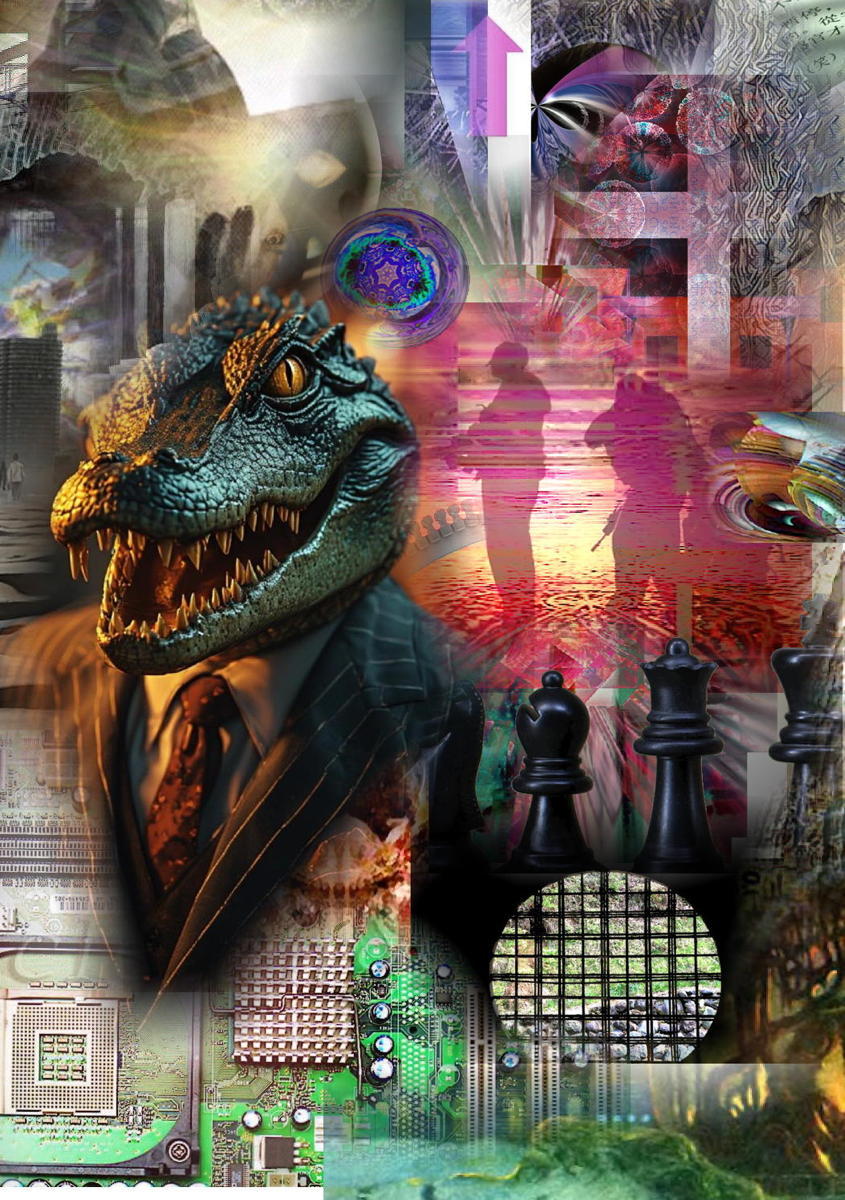
Four friends sat in the dim amber rot of the living room, the open magazine splayed across the coffee table like a wound left uncovered. Nobody had moved to close it. The glossy page caught the television's cold flicker — images of weapons rendered in sleek product photography, lit the way luxury cars are lit, the way watches are lit, the way things are lit when someone needs you to desire them. The advertisement's font was clean, confident, and kerned with quiet pride.
Outside, somewhere a siren wailed and then died — swallowed by the city's indifferent throat. The silence it left behind felt thicker than the one before it.
Kris shook her head slowly, eyes fixed on the glossy page, adding "If the average person knew how these merchants of death actually operated—" She stopped. Started again. "How they balance ledger books against body counts and call it quarterly performance, they'd be absolutely paralyzed."
Tim tapped his coffee cup against the table — a slow, hollow sound, like a knuckle against a coffin lid. His cup was nearly empty, had been for a while, but he kept tapping it anyway, as if the rhythm was the only thing keeping him anchored. "Those companies aren't stupid, Kris." His tone wasn't dismissive — it was something darker than that. Resigned. The voice of someone who has looked at a wall long enough to memorize its texture. "They spend more on PR and obfuscation than they spend on research and development. Their entire communications infrastructure exists for one purpose: making sure you never see the hands holding the strings. Never trace the money back. Never connect the factory floor to the field report."
He stared at the advertisement for another moment, then looked away — not because he'd stopped caring, but because some images need to be rationed.
Ted had stretched his legs out across the carpet, his posture a studied performance of profound boredom — but his jaw was tight, and something small and uncomfortable was flickering, refusing to go out. "Of course they do," he said, voice flat as old asphalt. "That's what makes it so exhausting. It's not even sinister in an interesting way anymore. It's just — banal." He let the word sit there for a second, ugly and accurate. "The absolute mundane banality of annihilation, advertised between cologne-tinted spreads." He tilted his head toward the ceiling. "Tell me honestly — is there a single page in this entire book that's inspirational? Or are we just sitting here together, carefully cataloguing the ongoing collapse of the human soul?"
Nobody answered him immediately.
Sam leaned forward, his face pale in the flickering television light. "Yeah, seriously. Can we just watch some cartoons? I want to be happy for ten minutes. Just ten." He pressed his hand flat against his sternum, as though testing whether the feeling was still there. "This stuff sits in you like lead. Like actual weight." A long pause. "It makes me depressed just knowing someone sat down, drafted those sentences, approved the layout, and sent it to print." He looked up. "Knowing it ran between other pages. Knowing people read it over breakfast."
The television continued its low, indifferent murmur in the corner. The magazine lay open on the table. The siren outside had long since gone quiet, absorbed into the city's vast and ordinary noise — the same city where violence was always under the surface.