Four friends sprawled across Bhäraté's living room in various postures of philosophical collapse. An-Yi lay inverted on a sofa, her legs hooked over the backrest, studying the ceiling as if it said something profound about human limits. Chariya sat cross-legged on the floor, his gaze fixed on a cup of tea, searching the amber liquid for the geometry of mankind's future. Daiki paced in a small perimeter around the living room, as if trying to outrun his own thoughts. Bhäraté cleared his throat. Knowing that all of his friends enjoyed poetry and were dillente poets, he smoothed a weathered page from a book of poetry and began to read with relish:
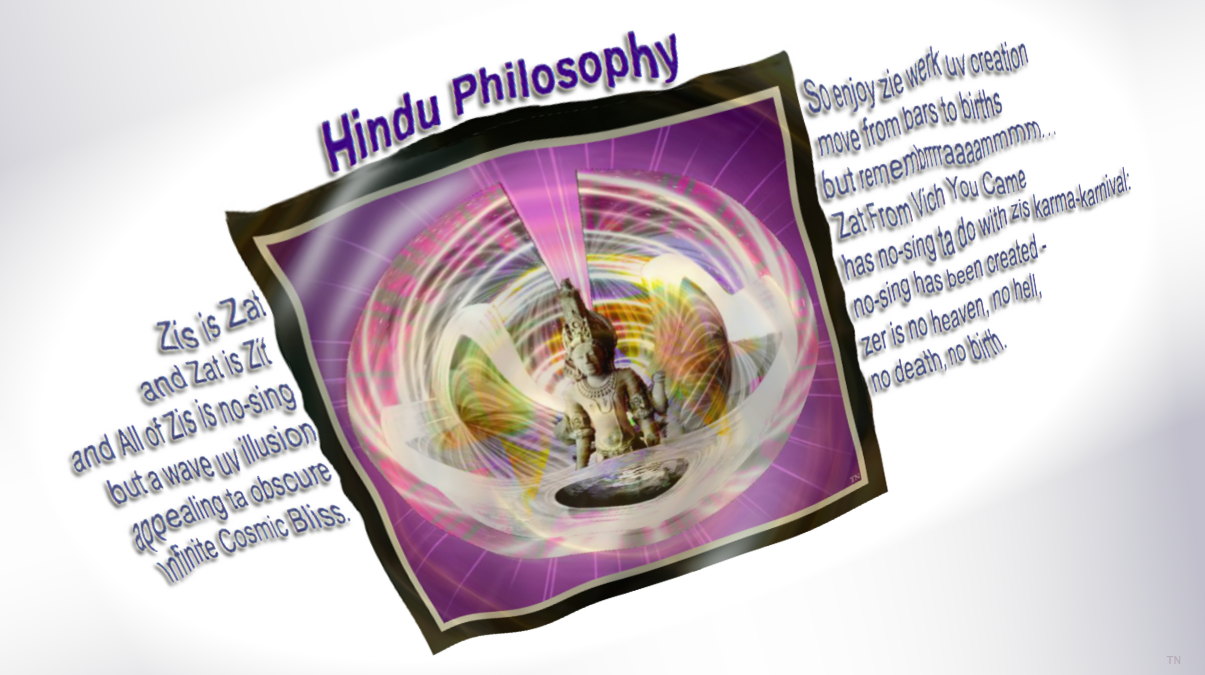
Daiki’s pacing stopped. He dropped into an armchair, then announced, "What utter nonsense!" Clearly, he was sick of metaphysics. "That poem was too glib. Like someone raided the deepest library in the universe and came back with nothing but a bumper sticker."
An-Yi, still inverted, tilted her head to bring the room back into focus. "And besides," she mused, with the clinical precision of a detective analyzing a crime scene, "why the affectation? Why does the poet sound like a man three liters deep into a German beer festival, hallucinating in the middle of a sacred Hindu rite?"
A slow smile spread across Bhäraté's face — the smile of a man who had been waiting for exactly this question. He put down the poetry book, then retorted, "It seems that," he said, "all of us are drunk." He let that land for a moment. "Some of us are drunk on the wine of materialism — on things, on noise, on the beautiful, exhausting labor of wanting. And the rest of us," he glanced at Daiki, "are drunk on the softer, more deceptive strands of wishful belief."
The room absorbed this. Chariya lifted his eyes from his cup. "Then..." he started, his voice barely a murmur, "How do we sober up?"
Nobody answered. Outside, a car passed. Somewhere, the great wheel turned, indifferent to the questions posed beneath it.
"That," Bhäraté spoke with terrifying clarity, "might be the only question worth asking."