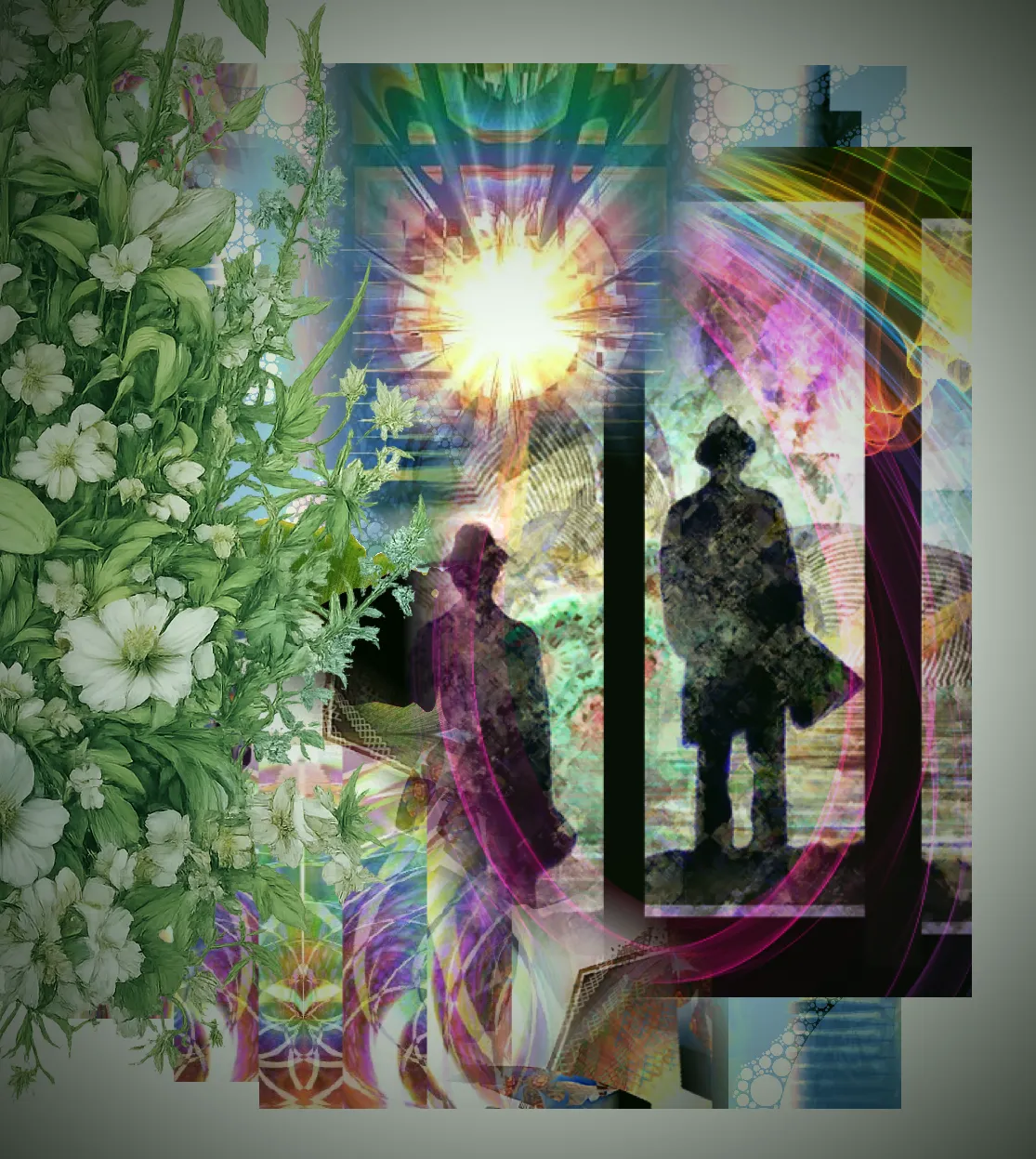
Tara and Tim sagged into their chairs as if they’d been assigned at a poetry night in the back of a hollowed-out bookstore. This venue was a fraud: a bookshop pretending to be a bar, a bar pretending to be a a café, and none of it convincing enough to mask the low-frequency hum of the city’s power grid vibrating through the floorboards. Voices braided in the shop into a low electrical hum. Conversations didn’t land; they hovered, then drifted off, as if embarrassed to be overheard. Most of the participants were only half-listening to each other. Most were listening to their own private fancies. Nobody seemed to catch the poet’s words, although some pretended to listen. The poet didn't look at the audience; he looked through them, indifferent to whether his signal was received or simply absorbed by the acoustic foam on the walls.
When the last line dissolved into the amber haze, Tara gripped her glass, her knuckles white. "Gee," she muttered, her voice a serrated blade of irony. "Aren’t we getting awfully philosophical for two pathetic worker-drones who are gutter-rats after shift?" She turned the glass slowly in her fingers, watching the light bend through it. "Growth twins decay. Ut est via. Very helpful, huh? I'll remember that at six tomorrow morning when the recycling conveyor belt jams again and the scrap-metal takes a chunk out of my shin. 'Don’t worry, boss, it’s just the cost of the road.'"
She glanced at Tim, still slumped forward over a stack of old paperbacks. His eyes angled toward the Inner Core’s towers beyond the window: blurred, gray, expensive. After ten hours at the recycling vats, Tim wasn't a thinking human; he was merely a bio-mechanical function that hadn't been powered down yet. "I suppose," Tim muttered in words drained of any passion or protest— an indifference born not of peace, but of a soul that had simply run out of things to believe in.
Tara watched him for a moment with an expression that had started as mockery but arrived somewhere adjacent to grief. The poet at the front began another poem. The espresso machine groaned. Somewhere in the middle distance, a recycling klaxon marked the end of a work shift, and the sound drifted through the room like a word in a familiar language neither of them could quite read, only obey.
Tara watched the poet start a new verse, but the beauty of the words felt like an insult now. The truth settled in her chest like lead: You bloom on schedule. You wither on quota. Everything else is decoration.