Air Force Pilot:
I only pull triggers and own the sky,
patrolling the clouds where cold shadows lie
and the targets below are just coordinates.
Intelligence Specialist:
I simply scan photos and assess potential threats,
reducing swathes of land to coded data,
then close the file, and forget.
Ground Ensign:
I load ammo into beasts of steel and flame,
not thinking of the persons they will kill and maim.
Aircraft Mechanic:
I grease gears and coax engines stay awake,
so these birds of prey won't shudder, stall, and break.
Factory Worker:
I turn bolts and check spans—
each tightened screw is another cog in our martial plan.
Military Chaplain:
I soothe the souls who fight and weep,
and bless the dead while wondering,
why is there so much yelling yet so little listening.
Politician:
I promise peace while counting gain,
then fund myself to get elected again
and smile for the cameras in a high-stakes game.
Citizen:
I pay my taxes, avert my eyes,
scroll past the photographs—the rubble, the children, the grief—
and return to my coffee, my comfort, my ordinary life,
praying the coming storm won't touch my skies.
All (unspoken):
And so the circles spin once more—
violence reborn from every chore.
Why is it so easy to forget
our higher callings in this score?
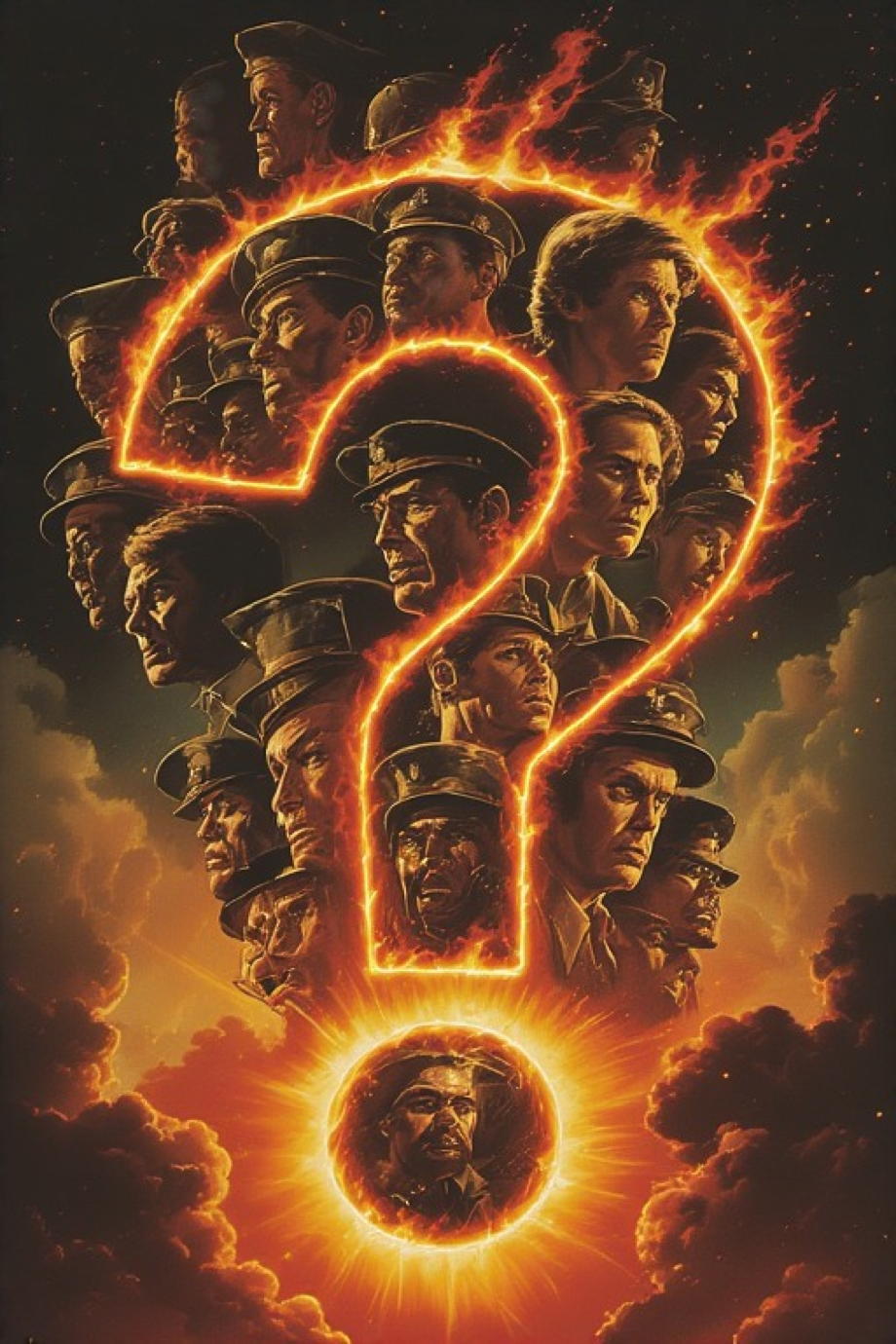
The air in the art gallery café felt heavy, the poem's echoes still vibrating against its walls. Frida leaned forward, meeting her friends' eyes with equal measures of sorrow and guilt. "This poem makes it plain," she said, her voice trembling slightly. "We are all complicit in the genocides in Ukraine, Gaza, and Myanmar. Our silence, our shopping habits, and taxes are partial fuels for those conflicts."
She paused, the words catching in her throat. “We tell ourselves it’s the generals, the presidents, the arms dealers. We make villains of them so we don't have to look at ourselves."
But the truth is harder." Her hands clenched, then slowly, deliberately opened. "We are all complicit in the unfolding genocides not because we act—but because we don’t." Her words settled into the room like stones into still water, and the ripples spread.
Dmiritri exhaled slowly. "Yes," he murmured, his voice barely above a whisper. "It is an uncomfortable truth, but a truth nonetheless. We inherit systems built long before us, yet we sustain them quietly, daily. By doing nothing, we keep them alive."
Satoru's jaw tightened. He leaned forward, eyes burning with something between anger and despair. "It’s easy to say we’re responsible. So what?" he demanded. "How do we stop men like Putin, Netanyahu, or Min Aung Hlaing? They command armies. hey operate behind walls of money and military might. He gestured sharply at the space between them. "And we sit here. Talking."
The silence that followed was taut, like a wire pulled to the breaking point. Ying remained still for a long moment, her gaze fixed on a point on the table as she steadied herself. Then she looked up, a small but defiant light in her eyes that hadn't been there before. "Power seems immovable, like a mountain," she said. "But mountains crumble. Empires fall. Not from one blow, but from countless small ones until what seemed permanent turns to dust."
Her gaze moved across each face. "In the grand ledger of history, ordinary people appear as nothing—as grains of sand against stone. But enough grains of sand, moved by the same wind, reshape coastlines. Bury monuments. Swallow cities whole." She smiled faintly. "Even an elephant fears a swarm of fleas."
Ying continued, her voice gathering quiet momentum, like a river finding its course. "It does not take a single hero to bend the arc of history. It never has. It takes persistence. Coordination. Courage that does not demand recognition. It takes the desires of small, determined groups—spreading, connecting, igniting— until what was once a whisper in a café becomes a voice too loud for any regime to silence." She looked at each of her friends in turn. "The question was never can we. The question is whether we will finally decide to."