Female Divinity
Some Thoughts on Patriarchy and Religion
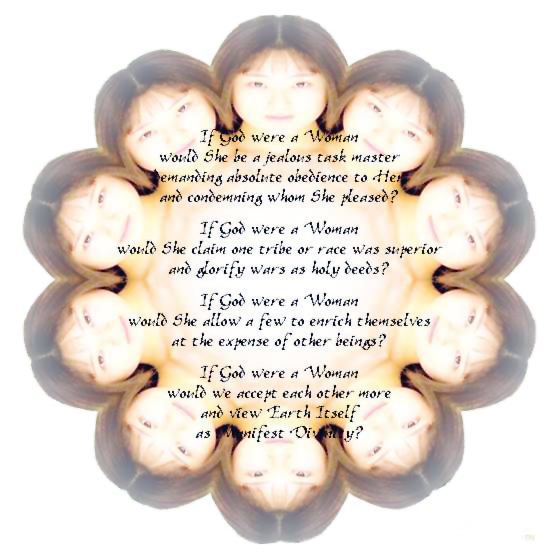
Anya let the last line of the poem settle in the air before she spoke, her fingers still resting lightly on the page. Her voice came out measured, almost careful, as though she were testing the weight of each word before releasing it. "Why anthropomorphize God?" she asked, tilting her head slightly. "Isn’t the whole notion of gender too limiting for divinity?"
Devani watched Anya for a moment, her expression soft but unyielding, like someone who had turned this question over in her mind many times. When she finally spoke, her tone was gentle, almost apologetic. "Undoubtably so," she said, "but if people think about God in even limited terms, it’s better than not thinking at all."
A flicker of irritation crossed Anya’s face, quickly suppressed. She drew a shallow breath, her eyes narrowing just enough to show she wasn’t satisfied. "Why’s that?" she asked edged with a challenge she was trying to keep civil.
Devani leaned back in her chair, her hands folding loosely in her lap. She glanced toward the window, as if searching for appropriate words before bringing her focus back into the room. "Most people are so busy thinking of themselves and their small affairs," she said, "They fail to notice the broader geometries. God is a way of transcending all notions of self." Devani knew her words would fall cold on Anya, but accepted that.
Anya shook her head, wondering whether deep communication with Devani was possible. "The logic doesn’t hold," she said, her words crisp now, no longer hiding the edge. "Belief in God is not needed for selfless transcendence. Conversely, it’s possible to profess religious faith, yet still be selfish and cruel." She paused, letting the contradiction hang between them. "Wǔ Zétiān of Tang‑dynasty China is a fitting example. She modeled herself as a sort of female divinity, yet few persons have been more ruthless, selfish, or cruel."
The room seemed to tighten briefly, as if history itself had stepped into the conversation. Anya’s gaze didn’t waver; she held Devani’s eyes long enough to make sure the point had landed, then looked down at the poem again with an unreadable expression.